
NTPC was the top gainer, spurting 4.28 per cent. Other winners were Bajaj Auto, Bajaj Finance, Sun Pharma, ITC, Hero MotoCorp, TCS, Yes Bank, HDFC, HDFC Bank and SBI, rising up to 1.38 per cent.

The growth had slumped to sub-5 per cent in the earlier two consecutive fiscals.

If oil prices rise, the government would face an uncomfortable political decision.

The deteriorating situation in China, a market that businesses around the world rely upon for growth, has spooked investors and prompted warnings from top companies like Apple.

HSBC maintained "overweight" rating on Indian equities, saying "fundamentals are strong".

'The Indian economy is in slowdown and growth may stay slow,' notes Devangshu Datta.

Externally, the global economy is stabilising, with better growth is expected this year.

Chief Economic Advisor Arvind Subramanian says that he hopes GDP growth will be at the upper end of the 7-7.5 per cent range.

The minders of the Modi government's economic policy believe it would take 7 to 8 quarters -- or till around late 2018 -- for the economy to reap the rewards of demonetisation.

However, Icra Rating Principal Economist Aditi Nayar feels that the numbers are a bit too optimistic and need real heavy-lifting by the Centre and the states. "The survey forecasts on real and nominal GDP will require a substantial push from Central and state spending as private sector capacity expansion is anticipated to be intermittent, and sector-specific in the next couple of quarters," she said. Nayar added that private consumption is likely to chart a differentiated recovery across income and age groups. Based on the comments made in the Survey, she expects the Union Budget to incorporate a growth in gross tax revenue of 15-16 per cent.

Stating that a weak fiscal position continues to constrain India's sovereign ratings, Fitch said the next government's medium-term fiscal policy will be of particular importance from a rating perspective.

A report published in British journal The Lancet reckons India's working population will surpass China's in the mid-2020s.

India's services sector growth accelerated in April, as strong demand conditions resulted in the fastest increase in new business and output in close to 13 years, a monthly survey said on Wednesday. The pick-up in demand occurred in spite of escalating price pressures. The seasonally adjusted S&P Global India Services PMI Business Activity Index rose from 57.8 in March to 62.0 in April, signalling the fastest expansion in output since mid 2010, amid a pick-up in new business growth and favourable market conditions.
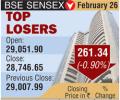
The 30-share Sensex ended down 261 points at 28,747 and the 50-share Nifty ended down 83 points at 8,684.

Strong macroeconomic headwinds causing turbulence in the $245-billion Indian IT industry are yet to calm down. Top Indian IT services companies are likely to post a decline or just marginal growth in sequential revenue in Q1FY24 because of a soft discretionary spending environment. Though the first quarter is seasonally strong for IT firms, "June 2023 will be an exception", according to analysts at Kotak Institutional Equities.

China's economy, which suffered 6.8 per cent slump in the first quarter due to the coronavirus pandemic -- the worst in 44 years -- bounced back posting 4.9 per cent growth between July and September buoyed by the government's sweeping efforts to stimulate demand and consumption.

The central bank maintained its bias towards a rate hike.

Growth in the Asia-Pacific region will be low, the aqency said

The mismatch between PMI and core sector could also be due to the fact that while core sector is calculated year-on-year, PMI is calculated month-on-month.

'Our stable outlook currently points to the fact that the ratings are likely to remain stable for the next couple of years.'

Moody's expects macroeconomic policies to contribute to sustained robust growth.

The Economic Survey called for improving business environment.

Concerns are swirling that Japan's dream of hosting the Tokyo 2020 Olympics could be a fatality of the spread of the new coronavirus, jolting organisers, sponsors, and media firms who have spent billions of dollars in the run-up to the event. Global insurers face a hefty bill if the coronavirus forces the cancellation of the Games, with estimates of the cost of insuring the showpiece running into billions of dollars.

The report said inflation is expected to remain below 5 per cent over the two years.

'While we note the very strong cyclical recovery in the economy, we believe there is still uncertainty over medium-term prospects.'

A rise in farm sector is estimated to raise demand for industrial goods and services, it added.

Although there are serious risks facing the US economy in the coming year, there is also a good chance that growth will be substantially stronger than it has been since before the recession began.
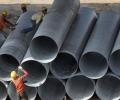
A bleak demand outlook for steel in the domestic as well as global market is also another reason Tata Steel may be looking to have additional liquidity as margins are expected to take a hit in the coming quarters.

The government's second round of stimulus will spur consumer spending in the near term but support to economic growth will be minimal, Moody's Investors Service said.

Sluggish rise in new business inflows and a cautious approach to costs reportedly led Indian manufacturers to shed jobs in September.

Former Finance Minister P Chidambaram on Monday said the high growth that Indian economy has logged in the first quarter of the current fiscal was on account of the UPA policies and the new government must give it the due credit.

'Karnataka's finances are much healthier than the Union government's, which is indebted to nearly twice the extent of the state.'

Indian economy is expected to improve marginally in the current financial year with its GDP at market price projected to expand by 3.4 per cent from 3.3 per cent in the previous fiscal, think tank OECD said.

Top laggards in the Sensex pack included HDFC, ICICI Bank, TCS, HCL Tech, Kotak Bank, Asian Paints, TechM and HUL, dropping up to 2.67 per cent.
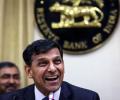
Growth acceleration will be gradual and it is still early days for a sharp recovery, says Gautam Chhaochharia, executive director and head of India research, UBS.

CPI inflation will remain below the target of 6 per cent set for January 2016.

Fitch said the full implications of Patel's resignation will only become clearer once there is some indication of the RBI's policy approach under his replacement, Shaktikanta Das

Manufacturing activities in India advanced further and touched a 31-month high in May supported by stronger increase in new orders and favourable market conditions, which in turn generated more employment opportunities, a monthly survey said on Thursday. The seasonally adjusted S&P Global India Manufacturing Purchasing Managers' Index (PMI) rose from 57.2 in April to 58.7 in May, indicating the strongest improvement in the health of the sector since October 2020. The May PMI data pointed to an improvement in overall operating conditions for the 23rd straight month.

The country's current account deficit is likely to hit a three-year high of 1.8 per cent or $43.81 billion in FY22, as against a surplus of 0.9 per cent or $23.91 billion in FY21, a report said on Thursday. According to an assessment by India Ratings, the Current Account Deficit (CAD) has moderated to $17.3 billion or 1.96 per cent of GDP in the fourth quarter of FY22 as against $8.2 billion or 1.03 per cent in the year-ago period, and massively down from $23.02 billion or 2.74 per cent in Q3, which was a 13-quarter high. The improvement in the key numbers are due to the remarkable improvement in merchandise exports in FY22, when it grew 42.4 per cent as against a negative 7.5 per cent in the pandemic-hit FY121.

'This market is very expensive in some pockets, dirt cheap in some, and the belly of the market is reasonably valued.'
